Dementia and Neurocognitive Disorders: Causes, Symptoms, Diagnosis and Management
Changes in memory, thinking, language, or behaviour should not be dismissed as “normal ageing” when they affect daily life. Neurocognitive disorders are medical conditions that need proper assessment, follow-up, and care planning.

What dementia and neurocognitive disorders mean
A neurocognitive disorder is a condition where thinking abilities decline enough to affect independence. The term includes mild and major forms. Mild neurocognitive disorder means the person has measurable decline but can still manage most daily activities. Major neurocognitive disorder means the decline interferes with daily living.
Dementia is the older and more familiar term for major neurocognitive disorder. It is not one disease. It is a syndrome with many possible causes.
Common types include:
Alzheimer’s disease
Vascular dementia after a stroke or poor blood flow to the brain
Lewy body disease, which may cause visual hallucinations and movement symptoms
Frontotemporal dementia, which often affects behaviour or language first
Cognitive problems linked to Parkinson’s disease
Alcohol-related and vitamin deficiency-related brain disorders
Causes and risk factors
The causes vary by type, but most involve damage to brain cells and their connections.
Age is the strongest risk factor. Risk rises after 65 years, though younger people can also be affected.
Other important risk factors include:
High blood pressure, diabetes, high cholesterol, and heart disease
Stroke or repeated small vessel disease in the brain
Smoking and heavy alcohol use
Severe head injury
Low physical activity
Depression and social isolation
Hearing loss that is not corrected
Poor sleep, including untreated sleep apnoea
Family history in some conditions
Low vitamin B12 or thyroid problems, which can mimic or worsen cognitive decline
In India, doctors also look for treatable causes such as vitamin B12 deficiency, thyroid disease, infections, medication side effects, and long-term alcohol use. These do not explain every case, but they are worth checking because treatment can help.

Clinical features and warning signs
Symptoms differ from person to person. They also depend on which part of the brain is affected first.
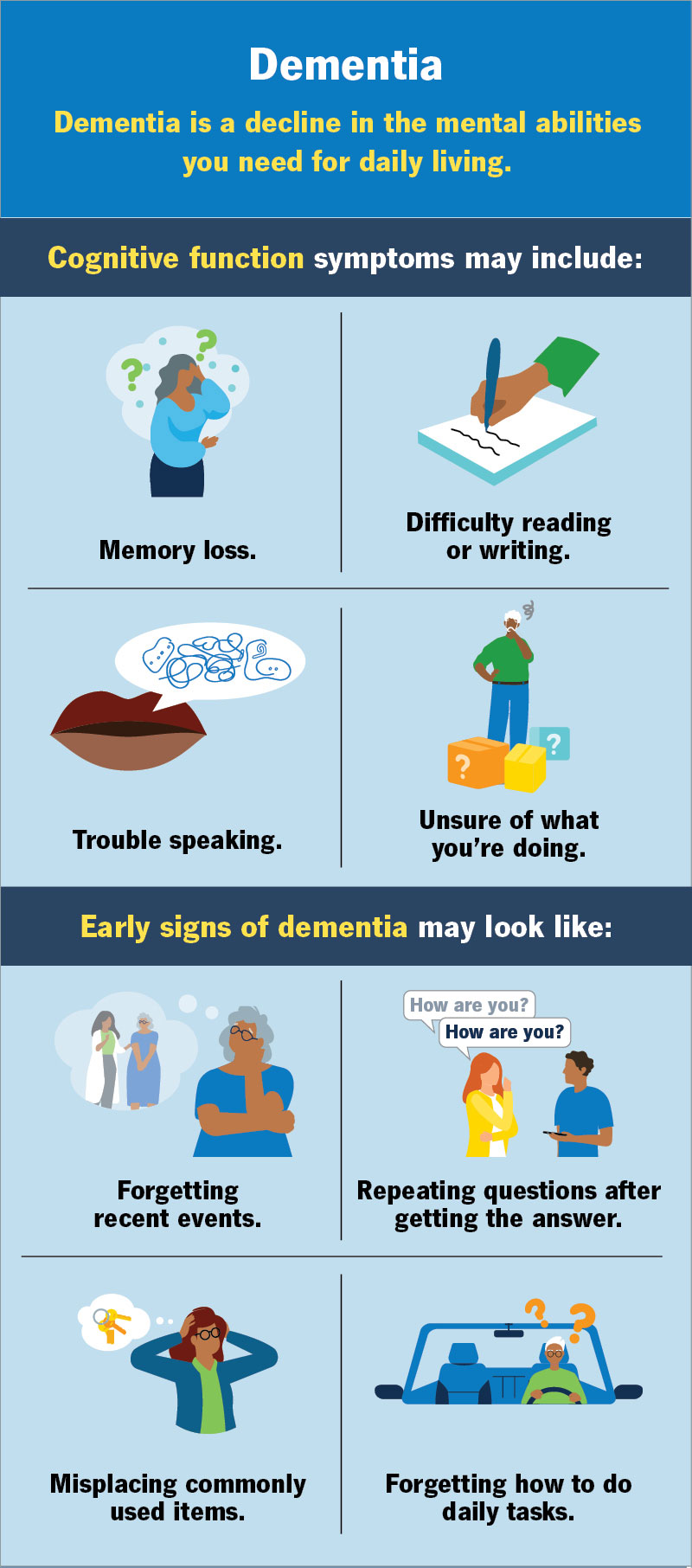
Common features include:
Repeating questions or stories
Misplacing items in unusual places
Trouble managing money, medicines, or cooking
Getting lost on familiar routes
Difficulty finding words
Poor judgement or unsafe decisions
Changes in mood, sleep, or personality
Loss of interest in usual activities
Suspicion, false beliefs, or seeing things that are not there
Problems with walking, balance, or falls in some disorders
A memory disturbance alone does not confirm a diagnosis. Stress, poor sleep, depression, medicines, infections, and delirium can also cause confusion. Delirium is different because it starts suddenly, often over hours or days, and attention fluctuates. It is a medical urgency, especially in older adults.
Alzheimer’s disease often starts with short-term memory problems. Frontotemporal dementia may start with socially inappropriate behaviour, loss of empathy, overeating, or language difficulty. Lewy body disease may cause vivid visual hallucinations, acting out dreams, stiffness, and changing alertness.
Investigations and diagnosis
There is no single test that confirms every cause. A good assessment combines history, examination, memory testing, blood tests, and brain imaging when needed.
A doctor usually asks about:
When symptoms began
Whether decline is gradual or sudden
Daily activities that have become difficult
Medicines, alcohol use, sleep, mood, and falls
Family history
Safety issues, such as driving, cooking, wandering, or financial errors
Cognitive screening tests may include tasks for memory, attention, language, drawing, and problem solving. These tests are not school exams. They help measure which thinking skills are affected.
Common investigations include:
Test or assessment | Why it is used |
Blood sugar, lipid profile, kidney and liver tests | Checks general health and risk factors |
Thyroid test | Looks for thyroid problems that can affect thinking |
Vitamin B12 and folate | Looks for deficiency-related cognitive symptoms |
Complete blood count | Checks anaemia or infection clues |
Brain scan such as magnetic resonance imaging or computed tomography | Looks for stroke, shrinkage patterns, tumours, bleeding, or fluid build-up |
Depression and sleep assessment | Finds common and treatable contributors |
In selected cases, specialists may advise for a CT or MRI scan.
Management and care strategies
Treatment depends on the cause, severity, and safety risks. The goal is to preserve function, reduce distress, and support the family.
Medications
The main medications used to manage symptoms of dementia include cholinesterase inhibitors, NMDA receptor antagonists, and newer targeted therapies.
Targeted Monoclonal Antibodies: Newer intravenous (IV) or injected treatments, such as lecanemab (Leqembi) or aducanumab, target amyloid plaques in the brain for early-stage Alzheimer's disease.
These medicines do not cure the condition but they can temporarily improve or stabilize symptoms like memory loss, confusion, and behavioral changes.. Benefits are usually modest. Side effects can include nausea, vomiting, diarrhea, dizziness and muscle cramps, so follow-up matters.
Medicines for sleep, agitation, hallucinations, or depression need careful use. Some sedatives and strong allergy medicines can worsen confusion.
Non pharmacological care
Non pharmacological care is central. It often helps more than adding tablets.
Core Non-Pharmacological Strategies
Cognitive Stimulation & Rehabilitation:
Cognitive Stimulation Therapy (CST): Group or individual sessions involving themed activities, puzzles, trivia, and creative tasks to boost memory and social well-being.
Cognitive Rehabilitation: Working with a specialist on specific daily challenges by using preserved brain pathways to assist impaired areas.
Emotion-Oriented & Behavioral Therapies:
Reminiscence Therapy: Using photos, music, or familiar objects to talk about past events, which helps lift mood and spark memories.
Validation Therapy: Acknowledging and validating the person's feelings and reality rather than correcting them, which lowers stress and agitation.
Behavioral Management: Identifying triggers for actions like wandering or repetitive questioning and adjusting responses accordingly.
Sensory & Creative Interventions:
Music and Art Therapy: Listening to favorite songs, singing, or painting to reduce anxiety and encourage self-expression.
Aromatherapy and Massage: Using gentle touch, weighted blankets, or calming scents (like lavender) to soothe restlessness.
Animal-Assisted Therapy: Interacting with gentle pets to improve emotional engagement and lower stress.
Physical & Environmental Adjustments:
Structured Exercise: Regular walking, stretching, or light movement to maintain strength, balance, and sleep quality.
Safe, Familiar Environment: Keeping rooms clutter-free, using clear labels or family trees, maintaining a predictable daily routine, and avoiding dark welcome mats that can look like holes.
Healthy Nutrition: Following brain-healthy eating patterns like the MIND diet (rich in leafy greens, berries, whole grains, and fish).
For safety, families may need to review cooking, driving, wandering risk, and medicine storage. If behaviour changes suddenly, check for pain, constipation, infection, dehydration, or a new medicine.
Latest advances in research and treatment
Research has moved fast in recent years, especially in Alzheimer’s disease. Recent advances in dementia and Alzheimer's disease focus on early blood-based testing, disease-modifying immunotherapies, and new insights into brain inflammation and tau proteins.
Early Diagnosis and Biomarkers
Blood-based tests: Clinicians increasingly use blood tests measuring biomarkers like p-tau181 and p-tau217 to detect Alzheimer's pathology early without costly or invasive procedures.
Retinal and digital tools: New research explores non-invasive retinal vascular scans and remote digital cognitive assessments to flag risk years before symptoms worsen.
Disease-Modifying Therapies
Anti-amyloid drugs: Medications like lecanemab and donanemab clear toxic amyloid plaques from the brain to modestly slow cognitive decline in early-stage patients.
Next-generation treatments: Newer candidates like trontinemab use specialized "brain shuttle" technology to cross the blood-brain barrier more effectively.
Tau-targeted research: Because amyloid is only part of the puzzle, researchers are heavily shifting focus toward tau-lowering drugs and stopping the tangle-induced inflammation that drives cell death.
Lifestyle and Risk Reduction
Multidomain interventions: Structured programs combining physical activity, diet, and cognitive training continue to show strong benefits in protecting global cognition.
Targeting hearing and blood pressure: Managing mid-life high blood pressure and treating hearing loss significantly lower long-term dementia risk.
FAQ
Can dementia be cured?
Most progressive causes cannot be cured at present. Some conditions that mimic cognitive decline, such as thyroid disease, vitamin B12 deficiency, depression, medication side effects, or infections, can improve with treatment.
When should a doctor be consulted?
Seek an assessment when memory or thinking problems affect daily tasks, safety, work, finances, cooking, travel, or medicine use. Sudden confusion needs urgent medical care.
Is forgetting names always a warning sign?
Occasional forgetfulness can happen with ageing, stress, or poor sleep. Concern rises when problems are frequent, worsening, or affecting independence.
Can lifestyle changes help?
Yes. Regular exercise, blood pressure control, diabetes care, good sleep, hearing correction, social contact, and stopping smoking can support brain health and may reduce risk.
Key takeaway
Neurocognitive disorders need early, structured evaluation. Many causes can be managed, and some contributors are treatable. Early diagnosis gives time to plan care, improve safety, and protect quality of life.
Disclaimer: This article is for general information only. It is not a substitute for medical advice, diagnosis, or treatment. Anyone with memory loss, confusion, behaviour change, or sudden decline should consult a qualified doctor or neurologist.


Comments